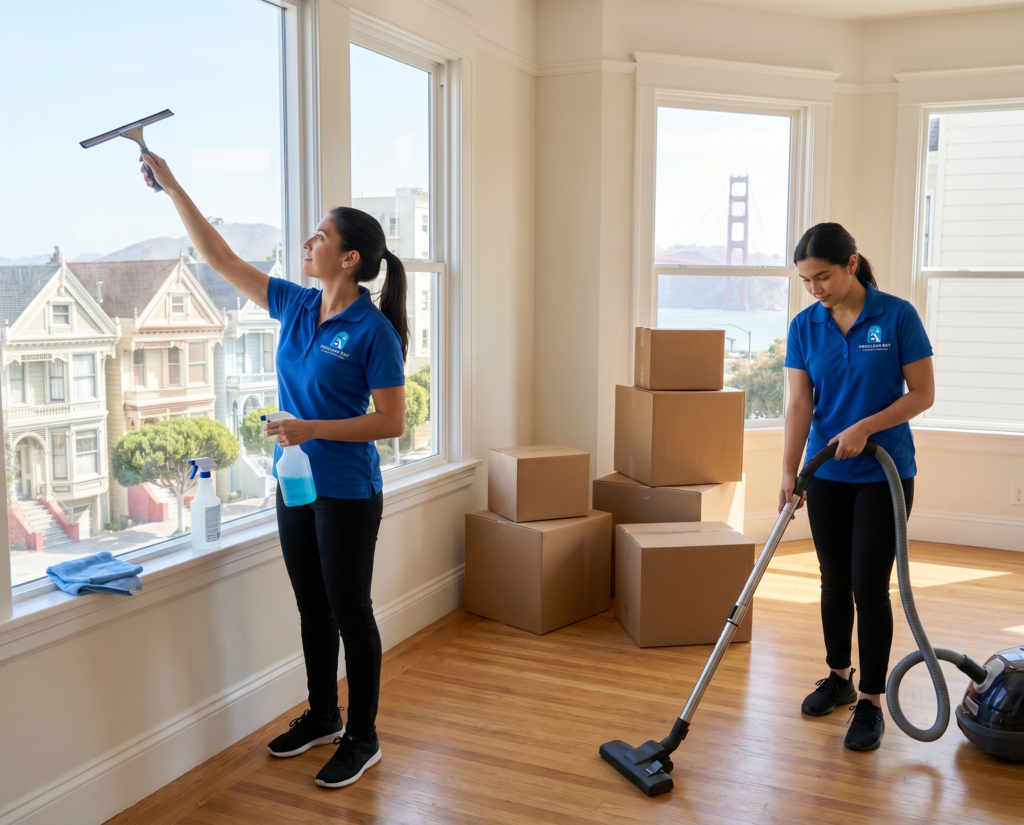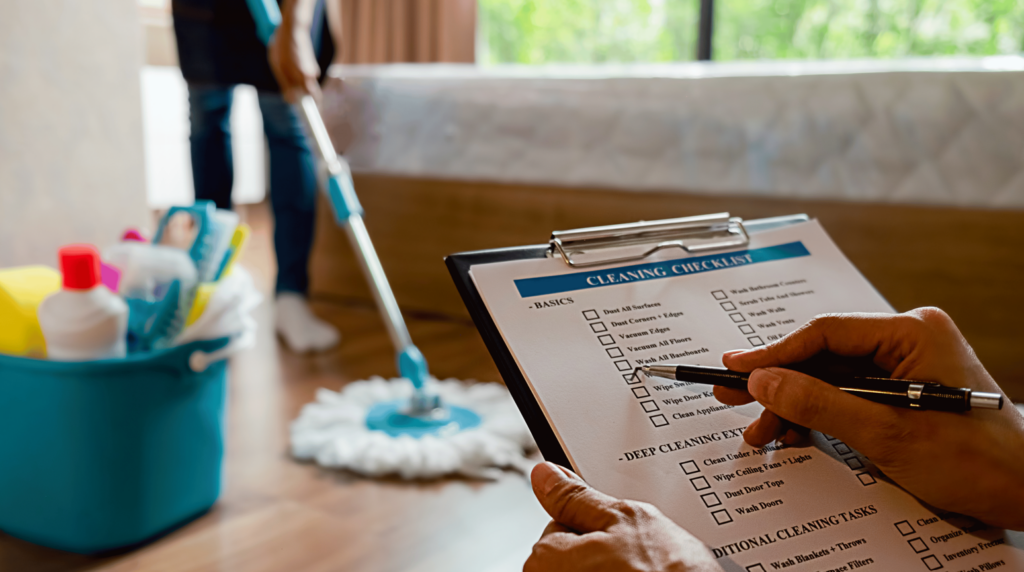

Most people getting their first professional house cleaning in San Francisco ask the same question: what do I need to do before they arrive? The short answer is less than you think. You don’t need to clean before the cleaner shows up — that’s literally what you’re paying for. But a few simple things done in the 15 minutes before your cleaner arrives will make a real difference in the results you get. This guide covers exactly what to do, what not to do, how to handle access and pets, and how to communicate with your cleaning team so every visit goes smoothly.
Do You Need to Prepare Anything at All?
Yes — but not in the way most people think. Preparing for a house cleaner is not about pre-cleaning. It’s about removing obstacles so your cleaning team can do their job as thoroughly as possible.
Think of it this way. A professional cleaner’s job is to clean surfaces — scrub bathrooms, degrease the kitchen, vacuum floors, dust everything. If those surfaces are buried under piles of mail, clothing, or dishes, your cleaner spends time moving things around instead of actually cleaning. The 15 minutes you spend clearing surfaces before they arrive translates directly into cleaner results.
That’s all preparation really is — clearing the way so the professionals can do what they’re trained to do.
6 Things to Do Before Your House Cleaner Arrives
1. Declutter surfaces — don’t clean them
Pick up items from countertops, floors, tables, and bathroom surfaces. Move dishes out of the sink. Gather clothes off bedroom floors. You’re not cleaning these areas — you’re just moving things so your cleaner can get to the actual surfaces underneath. This single step has the biggest impact on your clean results. A cleaner who can access every surface cleans every surface. A cleaner who has to navigate around clutter focuses on what’s accessible.
2. Secure valuables, medications, and irreplaceable items
This is standard best practice regardless of how much you trust your cleaning team. Put away jewelry, cash, prescription medications, and anything irreplaceable before any service visit. Not because your cleaners aren’t trustworthy — ours are background-checked and bonded — but because it’s a good habit that eliminates any ambiguity and lets your team work without hesitation.
3. Sort out your pets
Pets are one of the most common sources of complications on a cleaning day. A dog that barks and follows cleaners from room to room slows everything down. A cat that hides under the bed blocks vacuuming. If possible, arrange for pets to be out of the home during the clean or confined to one room that doesn’t need cleaning. Let your cleaning team know about pets in advance — our team works in homes with animals regularly, but a heads-up helps everyone work more smoothly.
4. Leave clear access instructions
Most San Francisco clients are not home during their clean — they’re at work, running errands, or simply out for the day. That’s completely normal. What matters is that access is clear before your team arrives. Leave your lockbox code, building entry instructions, parking information, and any alarm codes in a message to your cleaning company the day before. Don’t wait until the morning of — your team may be in transit.
5. Note areas that need extra attention or should be skipped
Is there a bathroom that hasn’t been deep cleaned in months? A stovetop with significant buildup? A room that should be left untouched? Tell your cleaning team in advance rather than leaving notes around the house. A quick message before the visit is the most reliable way to make sure your priorities are addressed. If you’re booking a deep cleaning for the first time, this is especially important — identifying the areas with the most buildup lets your team plan their time accordingly.
6. Check that hot water and utilities are working
This sounds obvious but is worth a quick mental check — especially in San Francisco’s older Victorian buildings and apartment complexes where building-wide maintenance sometimes affects individual units. If your water heater was acting up or your building had scheduled maintenance, let your team know. It affects how certain areas can be cleaned.
What You Do NOT Need to Do
This is the section most people actually want to read. Here is what you genuinely do not need to do before your cleaner arrives:
You do not need to pre-clean. Pre-cleaning before a professional cleaner arrives is one of the most common things new clients do and one of the most unnecessary. Scrubbing the toilet, wiping counters, doing dishes — these are exactly what you’re paying for. Save the time and energy.
You do not need to do laundry or fold clothes. Unless you’ve specifically added laundry folding as an add-on service, your cleaning team is not handling laundry. If clothes are on the floor you can either move them to a hamper or leave them — your cleaner will work around them.
You do not need to empty every trash can yourself. Your cleaner handles trash removal as part of the standard clean.
You do not need to buy or provide cleaning supplies. Professional cleaning services bring everything needed — products, equipment, cloths. ProClean Bay uses plant-based eco-friendly products by default. If you have a specific product you want used on a particular surface, leave it out and mention it — otherwise your team is fully equipped.
You do not need to be home. More on this below — but the short version is that most of our San Francisco clients are not present during their clean, and that’s completely normal.
Do You Need to Be Home During the Cleaning?
No — and most San Francisco clients aren’t. Being home during a professional clean is entirely optional. Here’s how to handle it either way.
If you won’t be home: provide clear access instructions the day before — lockbox code, building entry, any alarm information. Leave a contact number in case your team needs to reach you about something unexpected. When you return, do a quick walkthrough while everything is fresh and contact your company within 24 hours if anything needs attention.
If you will be home: let your team know in advance so they can plan their flow through the space. The most efficient approach is to stay in one area while they work through the rest of the home, then move when they’re ready for your area. Staying out of the way isn’t rude — it actually speeds up the clean and improves results.
For recurring clients specifically: once your team knows your home and you know their schedule, most clients find it easier to simply be out during the clean. The first visit often involves more communication — walking through priorities, pointing out areas — but after that the routine becomes automatic.
First Visit vs Recurring Visits — What's Different
Your first professional clean and your ongoing recurring cleaning visits are different experiences and it’s worth knowing what to expect from each.
Your first visit
The first visit almost always takes longer than subsequent ones. If your home hasn’t been professionally cleaned recently — or ever — there will be buildup in areas that take more time to address properly. Grout lines, stovetop degreasing, soap scum in the shower, dust on baseboards — these take significantly more effort the first time than they do when maintained regularly.
This is why we recommend starting with a deep cleaning for the first visit. A deep clean gets into the buildup that a standard clean can’t fully address and creates a proper baseline — so every recurring visit after that maintains a genuinely clean home rather than playing catch-up. Most clients who start with a deep clean tell us the difference is immediately noticeable.
For your first visit: communicate more than you think you need to. Walk through your priorities, mention any surfaces that are sensitive to certain products, flag anything that’s been neglected. The more context your team has upfront, the better the result.
Recurring visits
After the first one or two visits your team learns your home. They know which areas take longer, which surfaces need extra care, how you like things arranged. The preparation becomes minimal — a quick declutter before they arrive and you’re done. The consistency compounds over time. A home on a weekly or biweekly schedule requires dramatically less effort per visit than one cleaned for the first time after months of buildup.
How to Communicate With Your Cleaning Team
Clear communication before the first visit makes a bigger difference than most people expect. Here’s what to cover:
Before your first clean, let your team know:
— Your preferred cleaning products or any products to avoid (certain wood finishes, natural stone surfaces, or allergy sensitivities)
— Any surfaces that need special care — marble countertops, hardwood floors with specific finishes, antique furniture
— Areas to prioritize if time is limited
— Areas to skip entirely — a home office you’d rather not have touched, a child’s room with specific arrangements
— Pet information — breeds, temperament, where they’ll be during the clean
— Building quirks — parking restrictions, elevator access, noisy neighbors during certain hours
After any visit, give feedback promptly. If something was missed or done differently than you expected, contact your cleaning company within 24 hours. A good company will act on feedback immediately and adjust for every future visit. Don’t wait until the next appointment to mention it — by then the context is gone.
What to Do After Your Clean
When you return home after a professional clean, do a quick walkthrough while everything is still fresh. Check the areas you care most about — kitchen surfaces, bathrooms, floors. This only takes a few minutes and it’s the most effective way to catch anything that was missed before the details fade.
If something isn’t right: contact your cleaning company within 24 hours. At ProClean Bay, our 100% satisfaction guarantee means we’ll come back and re-clean any flagged area free of charge — no arguments, no fine print. But the 24-hour window matters. The sooner you flag it, the easier it is to address.
If everything looks great: consider leaving a Google review mentioning the specific service. Reviews that name the type of cleaning — recurring, deep clean, move-in — help other San Francisco homeowners make better decisions and help your cleaning company grow. It takes two minutes and means a lot.
Quick Preparation Checklist
Use this before every cleaning visit:
Before your cleaner arrives:
- Clear surfaces — countertops, tables, floors
- Move dishes out of the sink
- Secure valuables and medications
- Sort out pets — confined or out of the home
- Send access instructions — lockbox, building entry, alarm
- Note any priority areas or areas to skip
- Confirm hot water and utilities are working
You don’t need to:
- Pre-clean any surfaces
- Do dishes or laundry
- Empty trash cans
- Buy or provide cleaning supplies
- Be home during the clean
Frequently Asked Questions
Get a House Cleaning Estimate in San Francisco
Need help figuring out how long your home will take to clean?
We offer:
- house cleaning
- deep cleaning
- recurring cleaning
- move out cleaning
throughout San Francisco.
If you want a realistic estimate based on your home’s size and condition, we’re happy to help.